
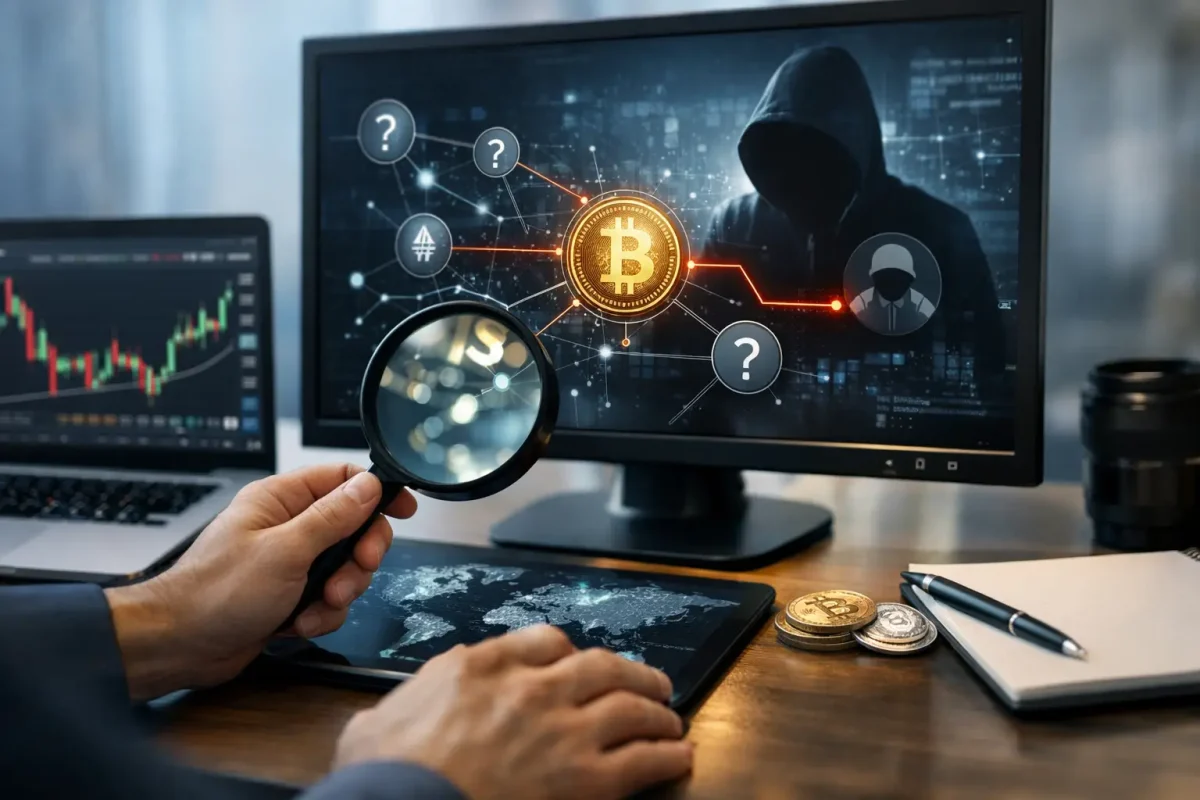
A crypto scam can move from a convincing message to an irreversible-looking transfer in minutes. The good news is that blockchain activity leaves records. Learning how to trace cryptocurrency transactions after a scam can help establish where funds moved, identify exchange exposure, and prepare the evidence needed for a formal investigation.
Tracing is not the same as guaranteed recovery. A blockchain investigator cannot simply reverse a confirmed transaction, access another person’s wallet, or freeze funds without the authority of an exchange, platform, or law enforcement agency. What a properly conducted trace can do is turn a confusing loss into documented intelligence and give you a stronger path toward action.
Act Before the Evidence Disappears
The first hours and days after discovering a scam matter. Blockchain records remain public on many networks, but the surrounding evidence often does not. Scam websites disappear, messaging accounts are deleted, and criminals may quickly move funds through multiple wallets, bridges, swaps, or exchanges.
Start by preserving everything exactly as it is. Take screenshots of the scam website, conversations, wallet addresses, transaction confirmations, account profiles, payment instructions, and any promises of returns or withdrawals. Save emails and text messages in their original form where possible. Record the date, time, amount, cryptocurrency, network, transaction hash, and destination wallet address.
Do not edit screenshots or delete conversations out of frustration. Small details can later establish how the fraud occurred, connect multiple wallet addresses, or help investigators recognize a known scam pattern.
If you still have access to the wallet or exchange account used for the transfer, secure it immediately. Change passwords from a clean device, enable multifactor authentication, revoke unfamiliar wallet permissions, and move any remaining assets to a newly secured wallet if appropriate. Never share a recovery phrase, private key, password, or remote access with someone claiming they can retrieve your funds.
How to Trace Cryptocurrency Transactions After a Scam
A blockchain trace begins with the transaction hash, also called a transaction ID. This unique record shows that a transfer occurred on a specific network. Using blockchain forensic tools, an investigator follows the receiving address and maps each later movement of the assets or their likely proceeds.
The analysis looks beyond a single transfer. Investigators may examine wallet balances, timing, repeat counterparties, transaction patterns, token swaps, smart contract interactions, and links to wallets previously associated with fraud. On transparent networks, this can reveal whether funds were consolidated with other victim payments, split into smaller amounts, transferred to a cross-chain bridge, or sent to a centralized exchange.
The work becomes more complex when scammers use privacy-focused assets, mixers, decentralized exchanges, or chains with limited public data. These tools do not make an investigation impossible, but they can reduce certainty and require more careful attribution. A credible report distinguishes confirmed facts from reasonable indicators rather than overstating what the data proves.
What a Trace May Reveal
A well-documented trace can identify the flow of funds and potentially identify a service provider that received them. For example, if stolen assets enter a wallet cluster associated with a major exchange, that finding may support a timely report to the exchange’s fraud or compliance team. The exchange, not a private investigator, determines whether it can restrict an account or preserve records under its policies and applicable law.
A trace can also show that the funds reached a gambling service, payment processor, bridge, decentralized protocol, or another high-risk address. Even when the final owner cannot be identified from the blockchain alone, this information can help law enforcement, legal counsel, or an exchange understand the route taken.
What it cannot reliably reveal is a scammer’s real-world identity from a wallet address alone. Wallets are pseudonymous. Attribution usually requires additional evidence, such as exchange account records, device evidence, communications, domain records, or legally authorized requests.
Avoid the Second Scam
People who have lost crypto are frequently targeted again by fake recovery agents. These fraudsters search public complaint posts, impersonate cybersecurity firms, claim they have already located the funds, or demand an upfront fee to “activate” a recovery process. Some ask victims to connect a wallet to a malicious site or disclose their seed phrase for verification.
Treat any promise of guaranteed recovery as a serious warning sign. No legitimate specialist can guarantee that funds will be returned, especially before reviewing the blockchain data and evidence. Be cautious if someone contacts you unexpectedly, pressures you to act immediately, requests payment in crypto without clear documentation, or says they need remote access to your device.
A legitimate provider should explain the scope of work, request authorization, protect your information, and provide transparent reporting. Technical investigation should never require surrendering control of your wallet or confidential credentials.
Report the Fraud With Organized Evidence
Reporting does not always produce an immediate result, but reporting early creates a record and may help connect your case to a larger investigation. Contact the exchange or platform used to send the funds and provide the transaction hash, destination address, scam details, and relevant screenshots. Ask how to submit a fraud report and whether the platform can preserve account or transaction information.
You should also report the incident to the appropriate law enforcement and consumer fraud channels in your jurisdiction. If the loss is substantial, involves threats or identity theft, or affects a business, consider consulting an attorney experienced in digital asset matters. They can advise on preservation requests, civil options, and coordination with authorities.
Keep your report factual. State what happened, when it happened, the addresses involved, the amount lost, and the evidence you possess. Avoid guessing at identities or making accusations that cannot be supported. Clear documentation is more useful than a long narrative filled with assumptions.
When Professional Blockchain Forensics Makes Sense
A professional trace is particularly useful when the loss is significant, the transaction path is already complex, a suspicious exchange withdrawal is involved, or you need a report that can be understood by a platform, attorney, insurer, or law enforcement agency. It can also help businesses investigate whether a compromised employee account, vendor payment, or wallet authorization led to unauthorized transfers.
At Skyline Tech Support, authorized blockchain investigations are conducted within a confidential, structured process. Specialists assess the available evidence, analyze transaction flows using blockchain intelligence and secure forensic methods, and provide clear reporting on findings, limitations, and recommended next actions. The goal is not to make unrealistic promises. It is to replace uncertainty with usable evidence and a responsible recovery strategy.
Questions Victims Commonly Ask
Can a crypto transaction be reversed?
Usually, no. Confirmed blockchain transactions are designed to be irreversible. Recovery may still be possible if assets reach a custodial platform that can act under its rules or in response to valid legal or law enforcement requests, but that outcome depends on timing, evidence, jurisdiction, and the platform’s cooperation.
Should I contact the scammer to demand my money back?
Do not send additional funds, negotiate, or accept requests to pay a tax, release fee, or verification charge. Continued contact often gives scammers another opportunity to manipulate victims or gather personal information. Preserve the messages and focus on securing accounts and documenting the case.
Can I trace funds if I sent them from a self-custody wallet?
Yes. The source of the payment does not prevent transaction tracing as long as you have the transaction hash or wallet address and know the network used. The key issue is the path the funds took after leaving your wallet.
Is a trace still worth doing if the scam happened months ago?
It may be. Funds can move long after the initial theft, and historical tracing can reveal connections not visible at the time of the loss. The earlier you act, the better, but a delayed case may still benefit from a professional review.
A calm, evidence-first response protects more than your chance of recovery. It protects your remaining assets, your personal information, and your ability to make informed decisions while the situation is still unfolding.
