
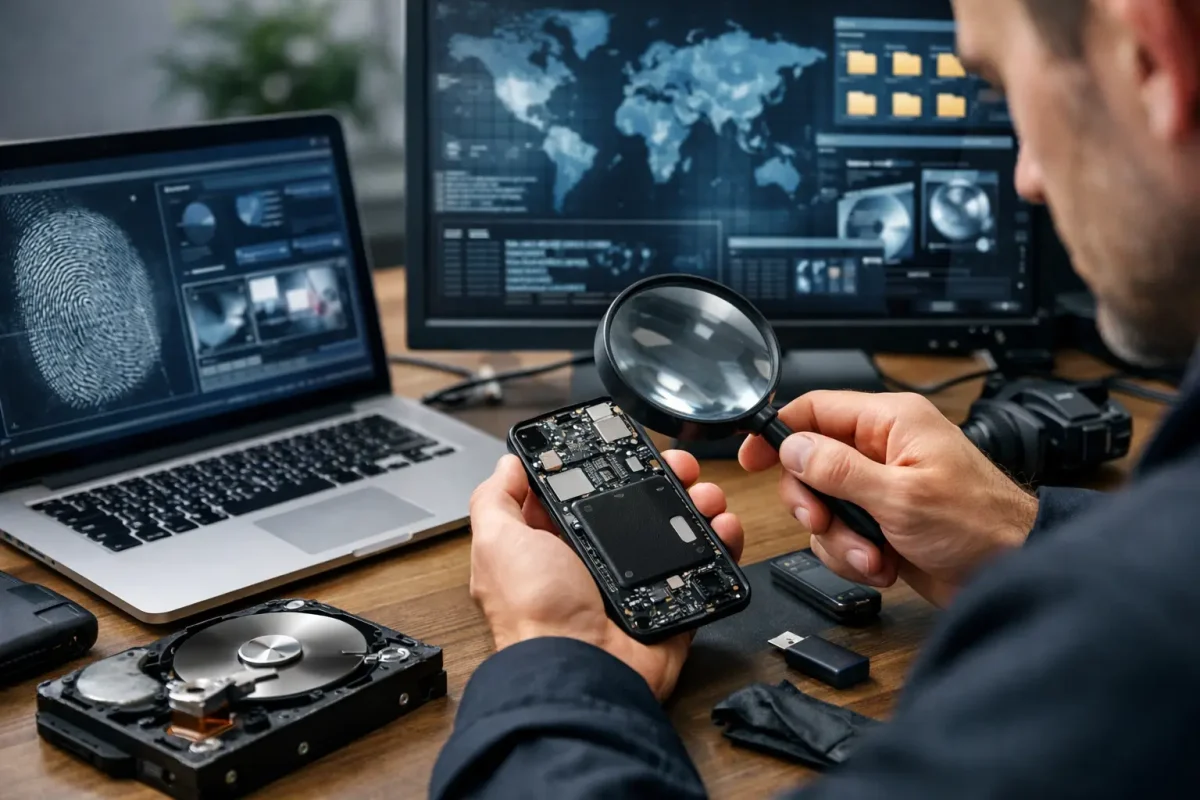
A missing wallet balance, an unfamiliar exchange withdrawal, a locked phone, or a compromised business account can create pressure to act immediately. A digital forensic investigation brings order to that moment. It identifies what happened, preserves relevant evidence, and helps determine the safest next step without altering the information that may be needed for recovery, reporting, or legal action.
For individuals and organizations, the goal is not simply to find a file or regain access. It is to establish facts through an authorized, confidential process. That distinction matters when financial assets, personal records, customer data, or account credentials may be at risk.
What Is a Digital Forensic Investigation?
Digital forensics is the disciplined examination of digital devices, accounts, networks, cloud services, and transaction records. Investigators collect and analyze data in a manner designed to preserve its integrity. Depending on the case, this can include computer logs, mobile device artifacts, deleted files, email headers, browser history, account activity, IP information, wallet addresses, and blockchain transaction paths.
A forensic review is different from casually searching a device or changing every password before records are captured. Quick action can be necessary to contain an active threat, but unplanned changes can overwrite useful information, break a timeline, or make it harder to understand how an incident occurred. The right approach balances containment with preservation.
For a crypto-related case, for example, an investigator may map wallet addresses, review transaction timing, identify movements across blockchain networks, and document links to known services or high-risk patterns. That does not guarantee stolen assets can be recovered. It does provide a clearer evidence package for exchanges, legal counsel, insurers, or law enforcement when escalation is appropriate.
When Forensic Support Is Worth Considering
Some incidents are straightforward. A user may know a password, have a valid recovery option, and simply need help restoring access securely. Others contain warning signs that call for deeper analysis.
Forensic support can be valuable after suspected account takeover, unauthorized crypto transfers, romance scam activity, ransomware, deleted or corrupted data, insider concerns, phishing, device compromise, or disputed online transactions. Small and midsize businesses may also need an investigation after unusual login activity, unexpected file access, email forwarding rules, or signs that sensitive information left the organization.
The scope depends on the question that needs answering. “Can this deleted data be recovered?” requires a different examination from “Who accessed this mailbox?” or “Where did these digital assets go?” A qualified specialist should define the objective before collecting data, rather than applying a one-size-fits-all process.
How a Digital Forensic Investigation Works
A responsible investigation begins with client authorization and a clear scope. The investigator confirms ownership or lawful authority over the device, account, wallet records, or business environment involved. Ethical investigators do not bypass access controls on systems a client is not authorized to access.
1. Triage and containment
The first priority is to understand whether the incident is still active. If an attacker may still have access, containment measures may include securing accounts, isolating an affected device from a network, preserving current session details, or pausing risky transactions. In a cryptocurrency case, this may mean moving remaining assets only after the exposure and recovery plan have been assessed.
Containment is not always the same as deleting or resetting everything. If suspicious activity is ongoing, specialists can capture key evidence first when circumstances allow. If immediate harm is likely, protecting the client takes precedence.
2. Evidence preservation
Forensic evidence is only useful if its source and condition can be explained. Investigators may create verified copies of relevant data, document timestamps, record the collection method, and protect original materials from unnecessary changes. This process helps maintain a defensible chain of custody.
Preservation may involve four core practices:
- Recording where each item came from and who handled it
- Creating verified forensic copies instead of working from the original where possible
- Documenting dates, times, device states, and account activity
- Storing evidence in controlled, secure environments
This level of care is especially important when the findings may support an exchange dispute, insurance claim, employment matter, civil action, or law enforcement report.
3. Analysis and timeline building
Once information is preserved, investigators examine artifacts for patterns. They may compare logins with device history, determine whether a phishing message preceded an account takeover, identify data transfer activity, or reconstruct a sequence of actions around a failed withdrawal.
Timelines often reveal the most useful facts. A login from a new location, followed by a password reset, new forwarding rule, and unauthorized transfer is more meaningful when those events are placed in order. The analysis can also rule out assumptions. A suspicious transaction may turn out to be an authorized recurring payment, a transfer between a user’s own wallets, or an error caused by a mismatched network.
4. Reporting and next-step strategy
A useful forensic report explains the findings in clear language. It should distinguish confirmed facts from likely interpretations and unresolved questions. It may include relevant records, timeline details, wallet addresses, transaction identifiers, indicators of compromise, and recommended actions.
The next step could be data recovery, credential remediation, account hardening, exchange outreach, blockchain tracing, employee security controls, or referral to legal counsel and law enforcement. The investigation should produce practical direction, not just a technical document.
What Investigators Can and Cannot Do
Digital forensics can uncover valuable evidence, but it has real limits. Encryption, deleted data, overwritten storage, privacy settings, unavailable platform logs, and cross-border services can restrict what is recoverable. On blockchains, transaction histories are often visible, but the real-world identity behind an address may not be publicly known.
No legitimate provider can promise to reverse every crypto transaction, recover every deleted file, or access an account without lawful authorization. Be cautious of anyone claiming guaranteed recovery, demanding payment to “release” funds, or asking for your seed phrase, private key, or remote access without a clearly documented reason.
A trustworthy provider explains the scope, risks, likely evidence sources, fees, and reporting process before work begins. They also communicate when an outcome is uncertain. Transparent expectations are part of protecting clients from a second loss after an already stressful incident.
Protecting Yourself Before and During an Investigation
If you believe an account or device has been compromised, avoid confronting a suspected attacker or continuing to communicate with a scammer. Do not send additional crypto to “verify” an account, pay a supposed recovery tax, or unlock a fabricated withdrawal. Save messages, screenshots, wallet addresses, transaction records, emails, and dates instead.
For businesses, preserve relevant access records and instruct employees not to wipe, reimage, or casually reuse potentially affected devices. At the same time, follow an incident-response plan to limit continuing exposure. The best choice depends on the severity of the event, the systems involved, and whether sensitive customer or regulated data may be affected.
Personal privacy also matters. Share only necessary materials through a secure intake process, and ask how evidence, credentials, and recovery files will be protected. A specialist should never need your private key to trace public blockchain activity, and they should use the least invasive method appropriate for the authorized assignment.
Questions to Ask Before Hiring a Specialist
Before authorizing an investigation, ask whether the provider has experience with your specific incident type, such as mobile access recovery, deleted data, business intrusion, exchange withdrawals, or blockchain tracing. Ask how they verify authorization, preserve evidence, protect confidentiality, and deliver findings.
It is also reasonable to ask what information is needed at the start, what work can be completed remotely, and when a case may require legal or law enforcement involvement. Clear answers help distinguish a structured forensic process from vague promises.
Skyline Tech Support approaches sensitive cases through authorized assessment, secure technical analysis, transparent reporting, and a practical remediation strategy. Whether the issue involves a compromised account, lost data, or suspicious crypto activity, the work should focus on facts, safety, and the next defensible move.
When the details matter, preserve what you can, stop additional exposure, and seek qualified help before the trail grows colder.
